How to Make Decisions Faster Without Regret
Key Takeaways
-
Making fast decisions without regret means moving at full speed only inside your lane (the arena where you genuinely see the patterns) and running a sequence, not adrenaline, when the pressure hits.
-
Pattern recognition is my unfair advantage, a term I picked up from the RaiseMasters community. Its dark twin is fragmentation: the same brain, off its lane, melted down a company doing over $150 million a year.
-
Under a real deadline, the sequence is: shrink the problem before you sprint at it, go first to the people who already trust you, then stay on it until it closes.
-
Moving that fast for years cost me presence with my family. The rebuilt version keeps the speed inside one lane, and keeps the focus, the purpose, and my twin boys.
-
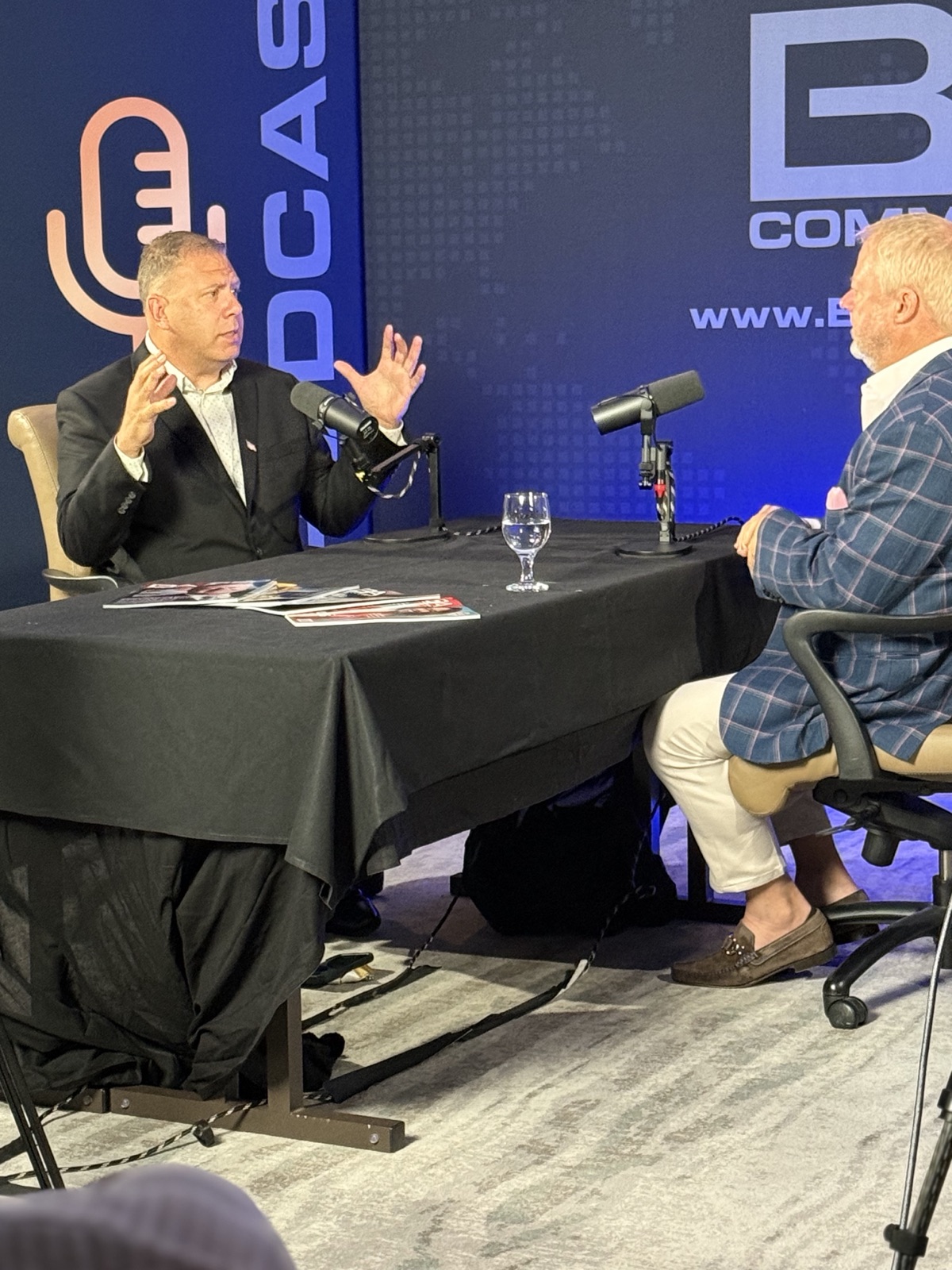
I told the whole story to host Adam Carswell on RaiseMasters Radio, Episode 958: about 16 minutes, recorded mid-comeback in late 2024. You can listen to the full conversation below.
You make decisions faster without regret by moving at full speed only inside your lane (the arena where you genuinely see the patterns) and by running a sequence when the pressure hits: shrink the problem, go first to the people who already trust you, stay on it until it closes. I’m Eric Zwigart. I built RPP Products, an oil and chemical company, to over $150 million in annual revenue, lost $35 million personally when it melted down, and rebuilt. In late 2024, mid-rebuild, I sat down with host Adam Carswell on RaiseMasters Radio, Episode 958, and told the story of moving fast on a deal with a hard deadline. Here’s what I’d want you to take from it, and here’s the conversation itself:
Prefer your podcast app? Listen on Cash Flow Connections.
What is an unfair advantage in business?
An unfair advantage in business is a trait your competitors can’t copy: something your brain does on its own that no process can imitate. Mine is pattern recognition: “I have certain gifts in the neurodivergent side of things. I can see patterns and see a lot of things.”
“Unfair advantage” is a term I picked up from the RaiseMasters community. I was brand new when Adam and I recorded, and you can hear it: “I’m not sure if we have a term for it yet in RaiseMasters, I’m fairly new.” But the trait the term names is one I’ve had my whole career: “I’m a neurodivergent thinker. So I’m kind of got that ADHD serial entrepreneur is my trait.” How that brain actually works day to day (the hyper-focus, the tools, the diagnosis) has its own page: The ADHD Advantage. That’s all the mechanics you’ll get here.
What this page is about is the advantage’s dark twin. Pattern-seeing at speed only works when it’s pointed at one lane. Spread it across everything at once and it stops being an advantage. It becomes fragmentation. And fragmentation is how companies melt down. I’ll show you exactly what that looked like in a minute.
How do you make quick decisions under pressure?
You make quick decisions under pressure by running a sequence, not by running hot: make the problem smaller before you sprint at it, go first to the people who already trust you, then stay on it until it closes.
I learned that sequence the hard way, on a single-family project in Southern California with a hard closing deadline. “I was in in the heat of the moment. I need I I found a deal and I I had a limited amount of time.”
And the timing could hardly have been worse. I was mid-rebuild, working without the rolodex I’d spent my whole career building. “Along with that thing crashing down, it crashed my network down too. Huge, massive.” As I told Adam: “my huge network that I would have had building that 150 million company is gone and it’s smaller and friends and family are smaller.” Nothing about this was going to be easy.
Here’s what I actually did, in order.
First, I made the problem smaller. “I was able to renegotiate with the bank.” That one decision shrank the gap between where the deal stood and where it had to be by the deadline, before I sprinted at it. Most people under pressure attack the problem at its full size. Shrink it first.
Second, I went straight to the people who already trusted me. “If you’re on a 911 fire, here’s what you do. And a lot of it’s focusing on your network very fast, because those are the people that trust you first and know you and can get comfortable with you pretty fast.” The reverse is just as true: “it’s very hard sometimes to get someone on the outside comfortable with you” when the clock is running. Trust is the only thing that moves at deadline speed. Strangers don’t.
Third, I stayed on it. “I just stayed on it and grinded it out and felt totally exhausted after doing it, but we got the victory. We got the win… the project closed.”
Adam kept circling back to how unlikely that close looked from the outside. It looked unlikely from the inside too. But none of it ran on adrenaline. Every step was sequence.
Staying composed while you do all that is its own skill, and it has its own page: staying calm under pressure.
What does “stay in your lane” mean in business?
Staying in your lane means going full speed only in the arena where your pattern recognition actually works, and slowing way down everywhere else. I can define it precisely because I’ve paid full price for the definition.
Before COVID, the lane was working: “I took a company and I grew it to 150 million a year from just me and my home… had 150 employees.”
Then I left the lane. “In 2020 COVID came and I stuck into a category and basically melted down the whole company. So I got into hand sanitizer and it melted down my automotive company, my oil company and it just, you know, stuck and we were in it too long and it blew up the cash flow.” And the dominoes kept going: “That in turn blew up about all my real estate projects.”
Notice whose fault that is. “We were in it too long.” Mine.
Here’s the whole doctrine in one sentence, the way I said it to Adam: “When you kind of fragment and get away from that, I didn’t stay in my lane and it melted down that company.”
The fast, pattern-seeing brain that closed the urgent deal above is the same brain that melted down RPP. The speed didn’t change between those two stories. The lane did. When it was over, I had lost $35 million personally (the full mechanics of that meltdown have their own page), and the rule I run now came out of that wreckage: inside the lane, decide fast and move. Outside the lane, the fast brain doesn’t get the keys.
What is the real cost of success?
The real cost of success at that speed wasn’t the $35 million. Money turned out to be the recoverable part. The cost was who I was while I was moving. Back then I was “kind of a more the Wolf of Wall Street type guy.”
Losing the company ended that guy. “It brings you back and it humbles you and dial you in, but you have a greater focus and a purpose.”
Near the end of our conversation, Adam noticed the photo behind me. “Oh yeah, yeah, that’s my boys, twin twin boys.” That’s what the rebuilt lane pays for now. “My life has definitely changed around for a lot of things… I’m smiling. I’m much more happy now and engaged with my family.”
A greater focus and a purpose. That’s the one thing the speed era never paid.
The full conversation is about 16 minutes: listen to my episode of RaiseMasters Radio, Episode 958. The longer arc (the build, the meltdown, the rebuild) is on my story page.
FAQ
Where can I hear the full episode?
The full conversation is RaiseMasters Radio Episode 958, “Effective Strategies for Urgent Deals”, hosted by Adam Carswell, about 16 minutes.
What is RaiseMasters Radio?
RaiseMasters Radio is a short-form interview show that airs on the Cash Flow Connections podcast feed. My episode is E958, hosted by Adam Carswell.
When did the episode air?
It aired in late 2024, when I was still in the middle of the rebuild, which is why it’s the least polished, most mid-flight telling of this story anywhere on the record.
For accredited investors only. This is not an offer to sell or a solicitation of an offer to buy securities. Any offering is made only pursuant to Rule 506(c) of Regulation D to verified accredited investors. All investments involve risk, including possible loss of principal.