How to Come Back After Losing Everything
Key Takeaways
- I started by myself in a room and built an oil and chemical company to over $150 million in annual revenue, then lost the company and $35 million personally when the COVID hand-sanitizer market imploded.
- Faith got me through the worst of it. The rule I live by: everything that happens to you was meant to happen.
- Anxiety comes from making up stories about a future that hasn’t happened. Dreams are good. Don’t create nightmares.
- The money came back later. The dad came back first: I became a present father to my twins.
- My answer to the show’s title question: dragon’s gold is adaptability. Adapt and overcome. You can listen to the full conversation below.
I built an oil and chemical company to over $150 million in annual revenue, starting by myself in a room. When COVID hit, I lost the company and $35 million personally. Here’s how I came back: faith, staying out of a future that hadn’t happened yet, and putting my attention on my twin boys instead of a dead company. The money came back later. The dad came back first.
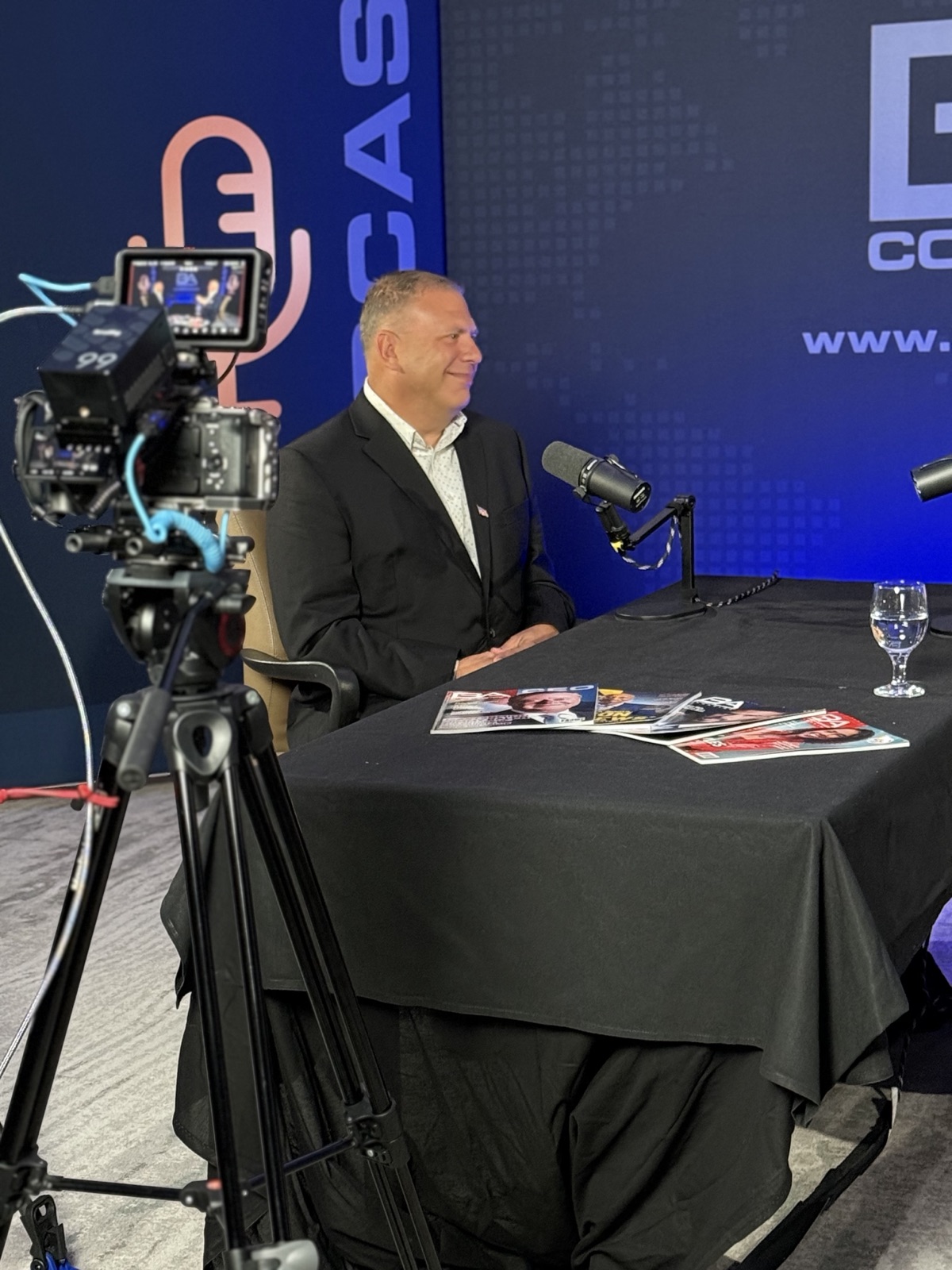
I talked through all of it with Justin Mills on his podcast, Dragon’s Gold: The Magic of Mindset. This post answers the questions people ask me most from that conversation, and the conversation itself is right here:
Prefer your podcast app? Listen on Buzzsprout.
What does it feel like to lose everything?
Like someone dying. That’s the closest thing I can compare it to.
For context, the two-beat version: I started by myself in a room and took the company to 150 employees and $150 million a year in sales. Then COVID hit, I pivoted the whole operation into hand sanitizer, and the market evaporated underneath me. I’ve already written the full mechanics of the collapse (the pivot, the inventory, the ninety days) in I Lost $35 Million. Here’s the Only Lesson That Matters, so I won’t repeat them here.
What that post doesn’t cover is the feeling.
Here’s how I described it to Justin: “At that point it implodes and that is the feeling of almost someone dying. I mean, you can’t do nothing about it and it’s just like dominoes.”
That’s the part nobody warns you about. The dominoes don’t fall all at once. You watch them go one at a time, and there is nothing you can do about any of them.
“I lost the oil company. I lost $35 million personally, and it just was a disaster.”
And I’ll say the same thing here I’ve said before: I stayed in too long. I got a little greedy. COVID was the setting, not the culprit.
How do you come back after losing everything?
You come back on faith, on staying out of an imagined future, and on letting the wreck change you. The money is the last thing that comes back.
There were fetal-position times. I’m not exaggerating that. What got me through “those times of the fetal position times was, you know, turning to God and faith and spirituality.” Whatever your version of that is, it matters, because “you’re never alone, if you have that connection in that spiritual faith.”
The second piece is a sentence I probably said six times in that one conversation: “Everything that happens to you was meant to happen is the way I look at it.” That sentence is the exit ramp off blame, off replaying it, off the story where you’re the victim. Take the ramp.
The third piece is staying in the present. “You look too far in the future, you get anxiety. And because you make up stories that aren’t real and usually that don’t happen.” Or the way I’d rather say it: “It’s awesome to have dreams, right? But don’t create nightmares, right? Don’t focus on things that haven’t happened yet. And I’m guilty of it.”
And the last piece is understanding what the wreck is actually for. “Pain and suffering causes big changes… when you’re on a positive, happy roller coaster ride, you’re not making much changes. It’s the time you make change is when you fell off the tracks, and you got to get the coaster back on the tracks. That’s when you make the change.”
Some of how I’m wired helped too. I’ve written separately about being an entrepreneur with ADHD.
These days I can even open a talk with it: “That’s how I start off the room sometimes, like, hey, you know, who lost 5 million, you lost 10 million… I had a couple go up to about 25 million, but I haven’t seen anybody lose 35 million.” Nobody’s beaten me yet.
“Success is in the eye of the beholder.” What came back for me isn’t measured in dollars. Which brings me to the real subject of that episode.
How does losing everything make you a better dad?
Because for the first time in years, I was actually there. Losing the company gave me back my attention, and I put it on my twins.
Justin didn’t title the episode after the money. He titled it “How Losing $35M Made Him a Better Dad.” That’s the right title.
“And that’s really the comeback is I wasn’t a good dad. I wasn’t a good father… because I wasn’t paying attention and I wasn’t around.”
When it all came down, who do you turn to? I turned to my kids, my twins. “They’re my life. I realized that is my purpose.”
Here’s the part that surprises people: “Saving that company or keeping that company wouldn’t have changed the things that I am now. I’m happy now. I love my time with them.”
“Happiness isn’t just growing this huge, massive company and having $150 million company and that’s not it.” So what is it? “Where are you meant to be? And mine’s meant to be a good dad and a good father and try to raise those twins right.”
A present father. That’s the job. Everything else got rebuilt around it.
“I don’t recommend losing $35 million to do it.”
What does “adapt and overcome” mean in business?
It means you can’t be rigid. The plan will break, and when it does, you look, you move, you change.
I joined the Marine Corps at 19 or 20 “thinking I needed discipline.” Adapt and overcome has been my answer ever since.
Justin’s show asks every guest the same closing question: what’s your dragon’s gold? Mine: “Dragon’s gold is essentially that you need to be adaptable. So you need to adapt, and you need to overcome challenges… you can’t be rigid, you have to look and move and change.”
That matters more now than it ever has. “This isn’t back in the day of the 40s and 50s and 60s of mechanical things… trends last for 30 years. You’re gonna be lucky that things last for two or three starting now.”
This post is the short version. The build, the meltdown, the twins, the faith. The whole thing is 47 minutes of conversation, and you can hear the full conversation on Dragon’s Gold.
FAQ
Where can I hear the full conversation?
On Dragon’s Gold: The Magic of Mindset, hosted by Justin Mills. The episode is called “How Losing $35M Made Him a Better Dad: Eric Zwigart on Failing, and Rising Again” and aired August 5, 2025. Listen to the episode here.
What is Dragon’s Gold: The Magic of Mindset?
A podcast about mindset hosted by Justin Mills. Each guest gets asked what their “dragon’s gold” is. Mine was adaptability: adapt and overcome.
How exactly did the $35 million disappear?
Hand sanitizer, a market that vanished overnight, and a warehouse full of bottles. The full mechanics are in I Lost $35 Million. Here’s the Only Lesson That Matters.
Did you go back to the oil business?
No. I rebuilt in real estate, which I’d been doing alongside the oil company the whole time. The longer version is on my story page.