ADHD and Faith: Can a Logical Brain Believe in Miracles?
Key Takeaways
-
Yes. A logical, ADHD brain can believe in miracles. Mine tries to analyze them first; the practice is letting the “how” go.
-
My companies are named Rock Solid for the teaching in Matthew 7:24–27: build on the rock, not on the sand.
-
Faith is how I got through losing $35 million, including thanking God for the hard moments themselves, not just for the way out of them.
-
The ADHD brain wants to be alone and wants closure on everything. Connection (God, true friends, team) is the counterweight to both.
-
I talked through all of it with host Michael Waite on Brain Shaman, Episode 134. It runs about an hour, the deepest I’ve gone on faith anywhere on the record. You can listen to the full conversation below.
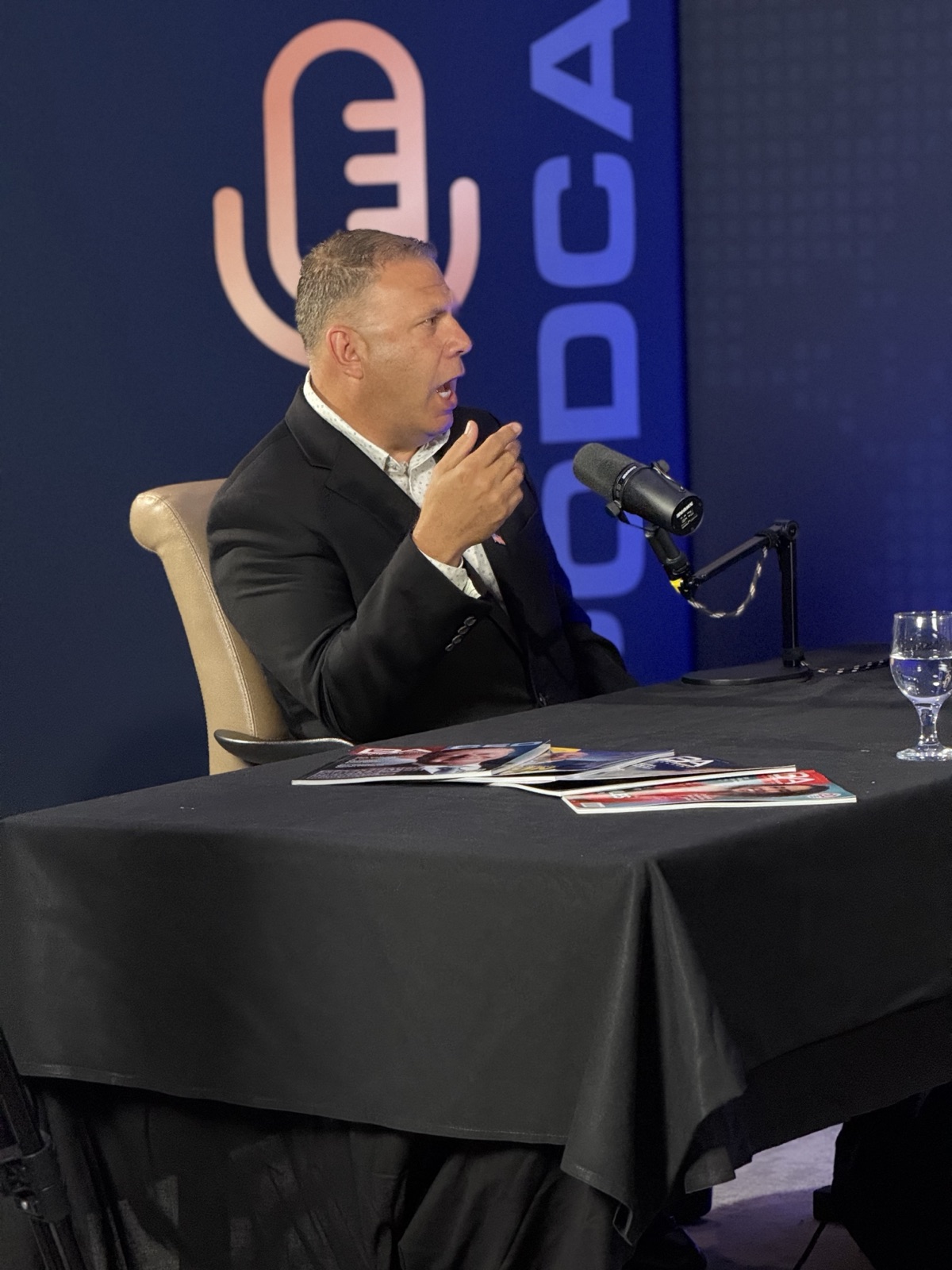
Yes. A logical brain can believe in miracles. Mine is about as logical as they come, it runs on ADHD, and it believes. I’m Eric Zwigart. I built an oil and chemical company to over $150 million in annual revenue, lost $35 million personally when it melted down, and rebuilt my life around real estate, my kids, and my faith. On Episode 134 of the Brain Shaman podcast, host Michael Waite and I spent about an hour on the strangest thread in the whole conversation: how does a brain built for logic and pattern-matching handle God? Here’s my honest answer, and here’s the hour itself:
Prefer your podcast app? Listen on the Brain Shaman site.
What does “build your house on the rock” actually mean?
It comes from Matthew 7:24–27, the parable of the wise and foolish builders: the man who builds his house on the rock stands when the storm comes, and the man who builds on sand watches it fall. Michael brought the verse up in our conversation, and he was right to. It’s the reference behind the Rock Solid name.
Here’s how I actually said it on the episode, fumble included:
“And that’s another part of calling these companies rock solid. I wanna build on the sand, or I don’t wanna build on the sand, I wanna build on the rock.”
I said it backwards and corrected myself live. I’m leaving it that way, because that’s how it happened. Then I got it right:
“So you wanna not be on the sand, you don’t wanna be shifty and things, and that’s a little bit of a biblical reference, but build on the rock, not on sand.”
So what is the rock made of, practically? Here’s the definition I gave Michael:
“Rock solid is based on having those integrity and compliance and your clear optics in terms of what you’re doing, your path, your vision, so that everybody is kind of aligned with your path, and you have that support of your community and your team… and you just execute.”
Integrity. Compliance. Clear optics. Community. Then execution. That’s the rock.
If you searched the brand name and want the fuller story of why the companies I’ve built since the collapse carry it, I’ve answered that in Who Is Eric Zwigart?
Why would anyone thank God for hard times?
Because the hard times are when you’re actually with Him. I know how that sounds. I hedged it on the episode myself: “it seems warped, but.” And I still mean every word of it.
First, the flat facts:
“I had made $35 million, and I lost it. A lot of a meltdown is a disaster, and it feels like you’re just dying because A, your company’s dying. What are you gonna do? Stabilize your family, all kinds of things come up. So it’s a definite process.”
Inside that process, one thing held: “I had to pray, I had to get more and more faith into me.”
And then the part that sounds warped, exactly as I said it: the practice of “bringing God into these hard moments and also thanking him when you’re in the easy moments, but in the hard moments, thanking him to have the hard moments, to have him with you, because it actually is a time that you spend more with him when you’re in trouble.”
“So when you’re in trouble, you tend to really focus on praying and get faithful and understand. And to this point, he’s always brought me out of it. And things always seem to work out, or things always seem to get better.”
Now the part I refuse to dress up. Faith did the work, and the money still didn’t come back:
“Doesn’t mean I have $35 million in the bank right now, but it does mean I’m much more happier and I get through challenges easier.”
I’m leaving the grammar alone too. There’s no hidden clause in my story where God refunds the $35 million. “So challenges to me are more, it’s an opportunity sometimes to get more connected with God as well.”
That faith wasn’t always there, either. As I told Michael: “I was the same way… lost it maybe in my teens and gained it back in my 20s and 30s… these crises and things brought my faith way back to me that I regained.”
And the loss gave me things staying rich never would have. “Life isn’t just business and money and success and running around and trying to make this certain number or hit these goals like a video game… there’s people and your kids and your family and those things become the most important and, and your spirituality and faith. And so that’s really what came out of my loss of that company.” It even made the ADHD diagnosis possible: “If I would have stayed and kept that company, I probably wouldn’t have gotten the ADHD idea that I have it. I would have stayed on this… kind of path that I was on. And it wasn’t a path of, of a family man or realizing your weaknesses or being humble.”
“My brother once asked a long time ago, when’s enough enough?”
I’ve told the collapse story beat by beat in I Lost $35 Million. Here’s the Only Lesson That Matters. and the rebuild in how to come back after losing everything. Here I only wanted to tell you who was in the room while both happened.
Can a logical person believe in miracles?
Yes. I do. But my brain has never made it easy, and I’d rather show you the struggle than hide it:
“To this day, I struggle with what happens in my mind is I start to go through miracles and I make up things to explain the miracles.”
That’s the pattern-matching machine doing what it was built to do. It has also seen things it can’t file:
“I’ve seen miracles in my own time of like, wow, there’s no way that could have happened or there’s no way that coincidence happened in terms of timing and connection and it feels like almost, it’s like a God-sent moment… So like a divine, it was a divine intervention.”
For years, the machine won:
“I used to analyze these miracles and be like, man, I can’t, you know, Bible, this, that, water, parting water, this doesn’t make sense, all these things. And then I started to think, I started to calm down and say, well, first of all, you have to have faith that you believe in God or this higher power.”
Here’s what I think is actually going on underneath, and it isn’t a spiritual defect. “Maybe not just ADHD, but maybe neurodivergence, you can get stuck on something. You’re stuck on a subject and you just keep wanting to go on it… because you have to get this closure.”
I can prove the getting-stuck part with something much smaller than a miracle. “I had this book a long time ago. It was a Dr. Phil book… my diagnosis thing on those little pages were disaster. It’s like, you’re a little bit of a mess.” There’s an exercise in that book, and: “I swear I wanted to do it, and I can’t do it, and I haven’t done it to this day. I can’t do the exercise, what he wants me to do, and I can’t tell you why. I wanna do it. I wanna see what it looks like, but I just can’t bring myself to it.”
A brain that can stay stuck on a Dr. Phil workbook for years will absolutely get stuck trying to reverse-engineer a miracle. Here’s where I finally landed:
“At a certain point, you just got to let it go and say, hey, you know, have faith. It was done. It got done. It says it was done. People said it was done. It’s proven. Don’t try to figure out how it was done. You can’t. And you’re just speculating. But it let me get past those.”
Letting go of the “how” is the practice. It took me years.
Why do people with ADHD isolate themselves?
In my experience, because being alone is easier than being half-understood. Here’s how I put it to Michael:
“ADHD to me and being neurodivergent is a big part because you have a tendency to wanna be alone because not everybody understands you or can figure you out or you spend your time figuring other people out… And you spend so much time thinking in your mind that you can overthink these things.”
Understanding the machine helps quiet it. “And in getting a diagnosis and understanding some of these things, it helps you calm down a little bit because you’re like, I know what’s going on. I know what’s going on in this brain. This brain is doing two things at once or 50 things at once.” I’ve written about how this brain actually works in business (the pattern recognition, the hyper-focus, the tools) in The ADHD Advantage, so I won’t repeat the mechanics here.
But more thinking never fixed the isolation for me. Connection did. And for me faith and connection turned out to be the same muscle: “If you just have a little bit of faith, that that can move mountains because it grows and as you connect with other people, it grows and grows and that, it really helps with not being alone.”
Michael asked me what else a person can have faith in besides God. My answer was friends, the real ones: “When you have friends that stick by you in hard times, those are your true friends. And the ones that are gone, or the ones that don’t talk to you… they really weren’t friends.” And: “friends and family that you can count on a couple of hands is a lot better when you thought you had hundreds of friends and they turn out to not be around when you go through tough times.”
Somewhere in the middle of the episode I flipped the interview and asked Michael, “You got lists, don’t you?” And he went hunting for his. Two brains recognizing each other.
When Michael framed all of this as connectedness, I didn’t hedge for once: “1000%, that’s really a big part of it. Spirituality and connecting with God and starting to slow down a little bit and realizing those things and putting those in the right spots, it’s amazing.”
How do faith and business fit together?
For me they meet in one sentence: due diligence first, then faith. Do all the work a person can do. Then trust.
“The more conservative you are, it’s not good. The more risk-taking and flying all over the place… isn’t good either… You’ve gotta do a good amount of due diligence and then make sure you’ve done the best you can. And in theory… you’ve done the work and the due diligence, it’s gonna work out and then you have to have faith and trust it.”
That’s the same move as the miracles. Work the problem as far as the work goes, then let go of the part that was never yours to hold.
The full conversation goes further than any page can. You can listen to Brain Shaman Episode 134 with Michael Waite here. More of my story is on the story page, and the rest of my interviews and appearances are on the media page.
FAQ
Where can I hear the full episode?
The full conversation is Brain Shaman Episode 134, “Eric Zwigart: The ADHD Brain in Business and Faith”, hosted by Michael Waite, aired September 3, 2025, about 62 minutes.
What is Brain Shaman?
Brain Shaman is a podcast about brains, behavior, and health, hosted by Michael Waite. Michael mentioned that ours was his first episode to explore the topic of real estate, though most of the hour is about the brain and faith.
How does ADHD show up in Eric Zwigart’s business?
That question has its own page. The pattern recognition, the hyper-focus, and the tools I use to manage a brain doing 50 things at once are all in The ADHD Advantage.
For accredited investors only. This is not an offer to sell or a solicitation of an offer to buy securities. Any offering is made only pursuant to Rule 506(c) of Regulation D to verified accredited investors. All investments involve risk, including possible loss of principal.